
What Is a HEAVY DUTY DOOR? Understanding Industrial-Grade Door Systems
A HEAVY DUTY DOOR is a door assembly designed to withstand more demanding operating conditions than those typically encountered in residential or light commercial applications. Depending on the product category, it may incorporate reinforced metal panels, stronger frames, heavy-duty hinges, industrial tracks, specialized locking hardware, or motorized operating systems.
Industrial facilities require door systems that can perform consistently despite frequent opening and closing, moving equipment, changing environmental conditions, and demanding security requirements. Ordinary doors may not provide the structural stability or operating endurance needed in these environments.
The term HEAVY DUTY DOOR covers several different products. A heavy-duty personnel door, for example, is not the same as a large industrial rolling door. One is generally designed to accommodate pedestrian traffic, while the other may need to accommodate forklifts, delivery vehicles, or material-handling equipment.
Important Consideration: The term "heavy duty" does not automatically mean that a door is fire-rated, impact-resistant, burglar-resistant, or suitable for severe weather. Each performance characteristic must be supported by the appropriate product specification, test report, listing, or certification.
Main Characteristics of a Heavy-Duty Door
- Structural durability: Reinforced materials and components support demanding operating environments.
- Operating endurance: Appropriate hardware and operating mechanisms support repeated use.
- Security options: Compatible locking systems and access-control hardware may improve controlled entry.
- Application flexibility: Configurations can be selected for personnel access, machinery access, or industrial vehicle movement.
- Environmental protection: Suitable materials, coatings, and seals can help manage moisture, dust, corrosion, and air leakage.
- Customization: Door dimensions, opening mechanisms, finishes, and accessories can be configured according to project requirements.
Common Types of Heavy-Duty Industrial Doors
Heavy-duty doors are available in several configurations. Selecting the correct type depends on the available space, opening dimensions, frequency of use, traffic conditions, and environmental requirements.
1. Heavy-Duty Steel Swing Doors
Heavy-duty steel swing doors are commonly used for personnel entrances, mechanical rooms, utility areas, industrial corridors, and secure commercial spaces. They may feature steel face sheets, reinforced cores, welded or mechanically assembled frames, and industrial-grade hinges.
These doors are suitable when a conventional swinging opening is practical and where a durable pedestrian access solution is required. Depending on the project, optional features may include door closers, panic hardware, vision panels, protective plates, or access-control systems.
2. Heavy-Duty Sliding Doors
Industrial sliding doors move horizontally along a track system and are often used where large openings or limited swing clearance make conventional hinged doors impractical. They may be configured as single-leaf or bi-parting systems.
A heavy-duty sliding door may be appropriate for manufacturing areas, equipment access points, agricultural facilities, and industrial storage buildings. Track capacity, roller selection, guide systems, panel weight, and available wall clearance must be considered during specification.
3. Heavy-Duty Rolling Steel Doors
Rolling steel doors are designed to coil around an overhead barrel or shaft. Their compact arrangement can make them useful for warehouses, loading areas, industrial storage facilities, and service openings where overhead space must be managed carefully.
Depending on the model, rolling doors may include motorized operation, wind-load-rated construction, security features, or specialized fire-rated configurations. These characteristics must be specified individually rather than assumed for every rolling steel door.
4. Heavy-Duty Sectional Overhead Doors
Sectional overhead doors consist of multiple connected panels that travel through a guided track system. They are widely used for vehicle access, loading bays, maintenance workshops, and logistics facilities.
Depending on construction, sectional doors can provide insulation, glazing, and weather-sealing options. The track arrangement, ceiling clearance, spring or counterbalance system, and drive mechanism must be compatible with the building structure and expected traffic.
5. Heavy-Duty Fire-Rated Doors
Fire-rated doors are specialized assemblies intended to provide a specified level of fire protection when properly selected, installed, and maintained. Their performance depends on the complete listed assembly, including compatible frames, hardware, glazing, seals, and closing mechanisms.
A fire-rated heavy-duty door should be selected according to applicable building regulations and the required fire-protection rating. A thick steel panel alone does not make a door fire-rated.
Heavy-Duty Door Materials and Construction: What Should Buyers Consider?
Material selection is one of the most important decisions when specifying a HEAVY DUTY DOOR. Materials influence corrosion resistance, structural performance, appearance, maintenance requirements, and long-term operating cost.
| Material | Key Characteristics | Typical Applications |
|---|---|---|
| Carbon Steel | Strong, versatile, and compatible with many fabrication methods; requires suitable corrosion protection. | Industrial buildings, warehouses, commercial facilities. |
| Galvanized Steel | Zinc-coated steel offers improved corrosion resistance in suitable environments. | Exterior doors, utility buildings, service entrances. |
| Stainless Steel | Offers corrosion resistance and cleanable surfaces; grade selection depends on exposure. | Food processing, washdown areas, specialized industrial facilities. |
| Aluminum | Relatively lightweight and corrosion-resistant, depending on alloy and finish. | Selected commercial and industrial door systems. |
| Insulated Steel Panels | Combine metal skins with insulating core materials. | Temperature-sensitive warehouses and conditioned industrial spaces. |
Why Steel Thickness Matters
Steel thickness affects a door panel's physical characteristics, but it should not be considered independently from reinforcement, core construction, frame strength, and hardware design. A heavier metal skin does not automatically guarantee better performance if the surrounding components are inadequate.
For swinging steel doors, the Steel Door Institute provides classification levels covering standard-duty, heavy-duty, extra-heavy-duty, and maximum-duty applications. Buyers should verify the applicable classification and performance requirements in the manufacturer's technical documentation.
Door Frames, Hinges, and Hardware
A heavy-duty door is only as reliable as its complete assembly. Door frames must be anchored correctly, hinges must support the door weight and frequency of operation, and locking components must be compatible with the intended use.
For motorized doors, the drive system, controls, sensors, emergency operation features, and supporting structure are equally important. The correct hardware combination depends on door geometry, loading conditions, operating frequency, and safety requirements.
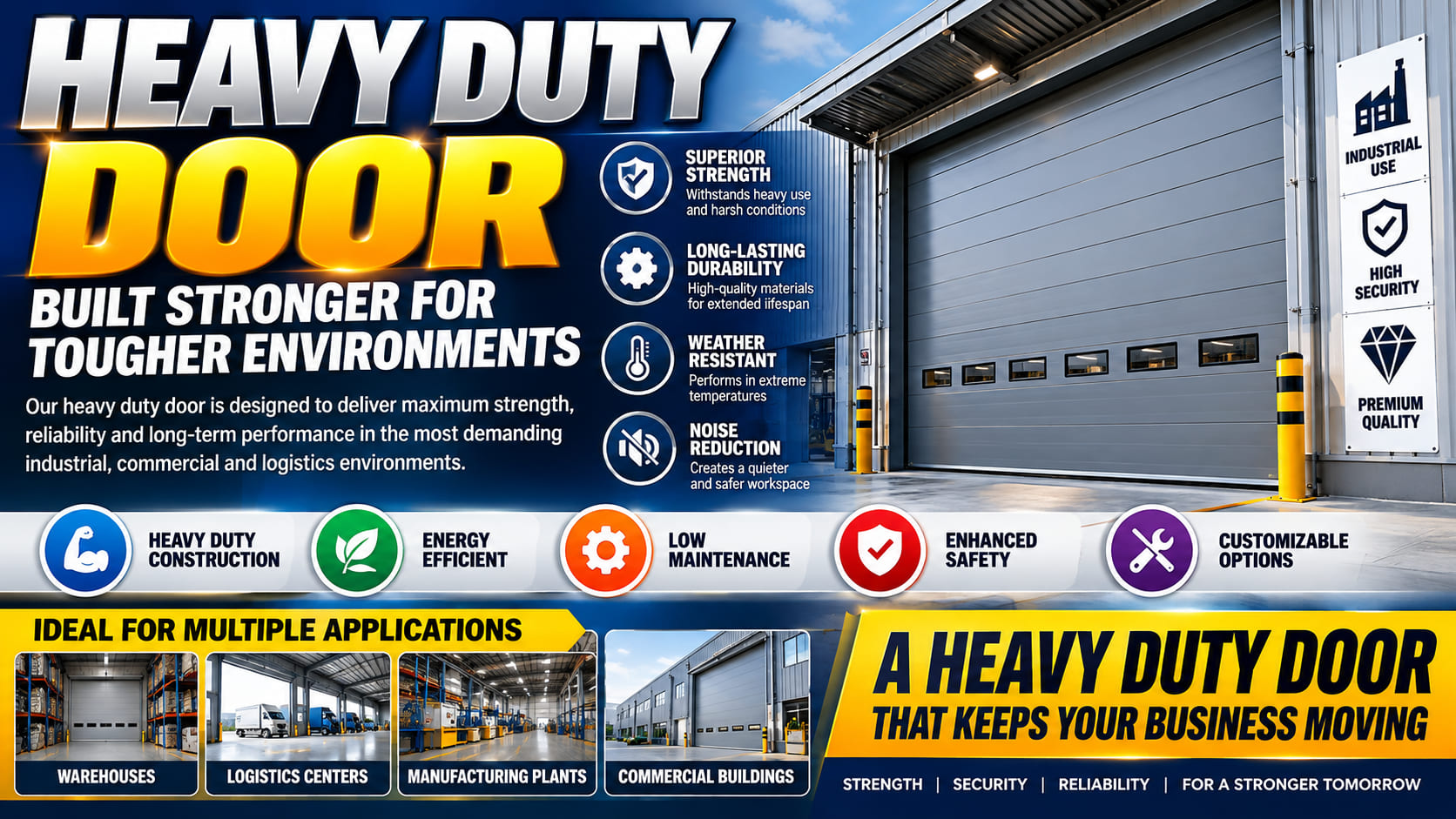
Where Are Heavy-Duty Doors Used? Common Commercial and Industrial Applications
Manufacturing Plants and Factories
Factories often require durable doors for production zones, machinery rooms, equipment access, and material transportation. Frequent operations, equipment movement, and industrial exposure make structural reliability and suitable hardware especially important.
Warehouses and Distribution Centers
Warehouses and logistics facilities may need large doors that accommodate pallet handling, delivery vehicles, and frequent loading operations. Opening speed, clearances, traffic management, and maintenance accessibility can significantly influence operational efficiency.
Commercial Buildings and Utility Rooms
Heavy-duty swinging steel doors are frequently considered for mechanical rooms, electrical rooms, back-of-house corridors, service entrances, and controlled-access spaces. These applications may also involve fire protection, acoustic performance, accessibility, or security requirements.
Food Processing and Specialized Production Facilities
Food production and washdown environments may require corrosion-resistant materials, easy-clean finishes, appropriate seals, and hygienic construction details. Stainless steel or specialized insulated door systems may be considered depending on environmental and sanitation requirements.
HEAVY DUTY DOOR vs. Standard Commercial Door: What Is the Difference?
A standard commercial door may be suitable for many everyday applications. However, facilities with frequent traffic, demanding environmental conditions, or specialized operational needs may benefit from a correctly specified heavy-duty assembly.
| Comparison | Standard Commercial Door | Heavy-Duty Door |
|---|---|---|
| Typical Usage | Ordinary commercial traffic. | Demanding commercial or industrial operations. |
| Construction | Varies by product and application. | May include stronger panels, reinforcements, and hardware. |
| Operating Frequency | Selected for expected everyday use. | Can be specified for higher usage demands. |
| Customization | Standard sizes and hardware options. | Potential for specialized dimensions and industrial features. |
| Initial Cost | Often lower for comparable basic configurations. | May be higher depending on specifications. |
| Maintenance | Depends on product and operating conditions. | May require specialized inspection and maintenance. |
The correct decision depends on operating conditions rather than the label alone. A properly specified standard-duty door may be sufficient for a low-traffic interior opening, while a demanding industrial application may require an appropriately rated heavy-duty door system.
Heavy-Duty Door Selection and Installation Process: 5 Essential Steps
Step 1: Identify Operational Requirements
Begin by identifying how the door will be used. Determine whether it serves pedestrians, forklifts, vehicles, production equipment, or controlled-access spaces. Consider the number of operating cycles, expected traffic patterns, and required opening speed. Also identify environmental conditions such as humidity, dust, temperature changes, and potential exposure to corrosive substances.
Step 2: Measure the Opening and Inspect the Structure
Accurate measurements are necessary for proper fit and operation. Depending on the door type, measurements may include opening width, opening height, wall thickness, headroom, side clearance, floor level, and available track space. The supporting structure must also be evaluated to determine whether suitable anchors and reinforcement can be provided.
Step 3: Select Materials, Hardware, and Performance Requirements
Choose the appropriate door configuration, material, finish, frame, hinges, guides, and locking or operating mechanisms. If the opening requires fire protection, wind resistance, accessibility, or other regulated performance, confirm the necessary product ratings and applicable documentation before finalizing the specification.
Step 4: Complete Professional Installation
Qualified installation personnel should position and secure the frame, mount the door components, install operating hardware, and verify alignment. For motorized or counterbalanced systems, installation must follow the manufacturer's instructions and applicable safety requirements. High-tension springs, counterbalance components, and powered equipment require properly trained technicians.
Step 5: Inspect, Test, and Document the Installation
After installation, the door should be checked for correct movement, hardware operation, clearances, closing performance, and applicable safety functions. Any required commissioning, certification, or fire-door inspection should be completed. Keep product documentation, operating instructions, inspection records, and maintenance recommendations for future reference.
How to Choose a Reliable Heavy-Duty Door Supplier: 6 Common Mistakes to Avoid
1. Choosing a Door Based on Price Alone
A low initial price may appear attractive, but it does not necessarily represent the lowest long-term cost. Compare material specifications, structural reinforcement, operating hardware, corrosion protection, and maintenance requirements. A door that is unsuitable for the application may create unexpected repair and replacement expenses.
2. Ignoring Actual Operating Frequency
A door operated a few times per day has different requirements from one operating repeatedly throughout multiple shifts. Ask the supplier whether the complete system, including the operator and hardware, is appropriate for the expected duty cycle.
3. Failing to Verify Materials and Specifications
Product descriptions such as "industrial grade" or "extra strong" are not substitutes for technical data. Ask for panel thickness, material grade, frame details, relevant ratings, and operating-system specifications.
4. Overlooking Site Conditions
Poorly measured openings, insufficient installation clearance, unsuitable anchoring surfaces, or inadequate electrical provisions may delay installation. A detailed site survey can identify these conditions before manufacturing or ordering begins.
5. Assuming Every Heavy-Duty Door Is Fire-Rated or Weatherproof
Fire ratings, wind-load performance, corrosion resistance, and weather sealing are separate requirements. A heavy-duty door may have one characteristic without providing the others. Confirm the exact performance classification required for the project.
6. Ignoring Warranty and After-Sales Support
Before purchasing, determine which parts are covered by warranty, whether replacement components are available, and who is responsible for servicing the installation. For high-traffic industrial doors, a clear maintenance and support arrangement can reduce operational disruption.
HEAVY DUTY DOOR Cost: What Affects the Final Quotation?
The price of a HEAVY DUTY DOOR depends on more than its width and height. Door type, material, operating system, structural requirements, finishing, accessories, installation complexity, and local project conditions all influence the final quotation.
Because heavy-duty personnel doors and large motorized industrial doors are substantially different products, a single universal price range would not provide a meaningful comparison. Buyers should obtain project-specific estimates based on a clearly defined specification.
| Cost Factor | How It Affects Pricing |
|---|---|
| Door Dimensions | Larger openings may require more material, reinforcement, and installation labor. |
| Material Selection | Carbon steel, galvanized steel, stainless steel, and insulated panels have different cost structures. |
| Opening Mechanism | Swinging, sliding, sectional, and rolling systems use different components. |
| Manual or Motorized Operation | Motors, control panels, wiring, and safety devices add system components and installation requirements. |
| Performance Requirements | Required fire ratings, wind resistance, insulation, or specialized testing can affect product selection and cost. |
| Surface Finish | Galvanizing, powder coating, painting, and specialized protective finishes carry different costs. |
| Site Conditions | Structural modifications, difficult access, demolition, and special equipment can increase installation expense. |
| Accessories and Hardware | Locks, sensors, vision panels, closers, seals, and access controls affect the total specification. |
How to Compare Heavy-Duty Door Quotations
A quotation should clearly identify the proposed door type, dimensions, materials, finishes, hardware, operator specifications, installation responsibilities, and warranty terms. If different suppliers include different work scopes, their prices should not be compared directly without adjustment.
- Confirm whether the price includes the door frame and essential hardware.
- Determine whether removal of an existing door is included.
- Check whether electrical installation is required and included.
- Review freight, unloading, lifting equipment, and delivery arrangements.
- Ask whether commissioning and functional testing are included.
- Clarify warranty conditions and future maintenance requirements.
Heavy-Duty Door Maintenance: Improving Reliability and Service Life
Even a well-designed HEAVY DUTY DOOR requires maintenance. Repeated movement, exposure to industrial conditions, and normal component wear can gradually affect alignment, hardware performance, and smooth operation.
Regular Visual Inspections
Facility personnel can conduct visual checks for damaged panels, loose visible components, corrosion, unusual noise, misalignment, and damaged seals. Any concerning condition should be reported and assessed before it becomes a more serious operational problem.
Professional Hardware and Operator Maintenance
Industrial tracks, rollers, hinges, motors, and counterbalance systems should be inspected and serviced according to the manufacturer's instructions. High-tension components and powered equipment should not be adjusted by untrained personnel.
Safety Systems and Emergency Operation
Where applicable, safety edges, photoelectric sensors, interlocks, emergency release systems, and control functions must remain operational. Fire-rated door assemblies may also require specialized inspections and testing under applicable regulations.
Maintenance frequency should be based on product instructions, actual duty cycles, environmental conditions, and regulatory requirements. Keeping service records can help facility managers identify recurring problems and plan preventive maintenance.
Planning a HEAVY DUTY DOOR Project? Prepare These Details Before Requesting a Quote
Before contacting a heavy-duty door manufacturer, supplier, or installer, prepare the essential project information. Providing accurate requirements makes it easier to determine whether a standard product can be used or whether a custom industrial door assembly is necessary.
Heavy-Duty Door Quotation Checklist
- Required opening width and height.
- Installation location and intended application.
- Preferred door type and opening mechanism.
- Expected daily operating frequency.
- Material and finish preferences.
- Required fire, wind, security, or insulation performance.
- Manual or motorized operation requirements.
- Available installation clearances and supporting structure.
- Requested delivery schedule and project location.
For projects involving factories, warehouses, distribution centers, or commercial facilities, technical consultation is particularly useful when opening dimensions, load requirements, or safety functions are not yet finalized.
Request a HEAVY DUTY DOOR quotation: Contact a qualified industrial door supplier by telephone, email, or its official inquiry form. Share the project measurements, operating requirements, and installation details to obtain a specification-based recommendation and itemized estimate.
HEAVY DUTY DOOR Frequently Asked Questions (FAQ)
Q1: What is a HEAVY DUTY DOOR?
A HEAVY DUTY DOOR is a door assembly designed for demanding commercial or industrial environments. Depending on its configuration, it may feature reinforced panels, stronger frames, specialized hardware, or industrial operating mechanisms.
Q2: Where are heavy-duty doors commonly installed?
Heavy-duty doors are commonly installed in factories, warehouses, logistics centers, manufacturing plants, equipment rooms, loading areas, and commercial buildings. The appropriate type depends on the opening and operational requirements.
Q3: What materials are used for heavy-duty doors?
Common materials include carbon steel, galvanized steel, stainless steel, aluminum, and insulated metal panels. Material selection should consider structural requirements, corrosion exposure, maintenance, and environmental conditions.
Q4: Can heavy-duty doors be customized?
Many heavy-duty door systems can be customized for opening dimensions, materials, finishes, hardware, operating mechanisms, and special performance requirements. Available options depend on the manufacturer and product configuration.
Q5: How much does a HEAVY DUTY DOOR cost?
Heavy-duty door pricing depends on dimensions, materials, construction, operating mechanisms, required performance ratings, accessories, and installation conditions. A project-specific quotation is the most reliable way to evaluate cost.
Q6: How long does heavy-duty door installation take?
Installation time varies according to door dimensions, system complexity, site preparation, structural conditions, and whether electrical or automation work is required. The installer should provide a project-specific schedule.
Q7: Are all heavy-duty steel doors fire-rated?
No. Heavy-duty construction does not automatically provide a fire rating. Fire-rated doors must meet applicable testing, listing, assembly, installation, and maintenance requirements.
Q8: Can a HEAVY DUTY DOOR be motorized?
Many industrial sliding, rolling, and sectional door systems offer motorized operation. The operator must be compatible with the door weight, dimensions, expected duty cycle, and required safety functions.
Q9: How often should heavy-duty doors be maintained?
Maintenance intervals depend on the manufacturer's instructions, operating frequency, environmental exposure, and applicable regulations. High-use industrial doors may require more frequent professional inspection than low-traffic doors.
Q10: How can I find a reliable heavy-duty door supplier near my project?
Search for industrial door manufacturers or installers serving your project area, review relevant project experience, and request technical specifications. Confirm service coverage, site inspection availability, quotation procedures, warranty terms, and maintenance support before ordering.